2.1.2026
When Nature Moves Downtown: Textile, Sound and Light in Dialogue
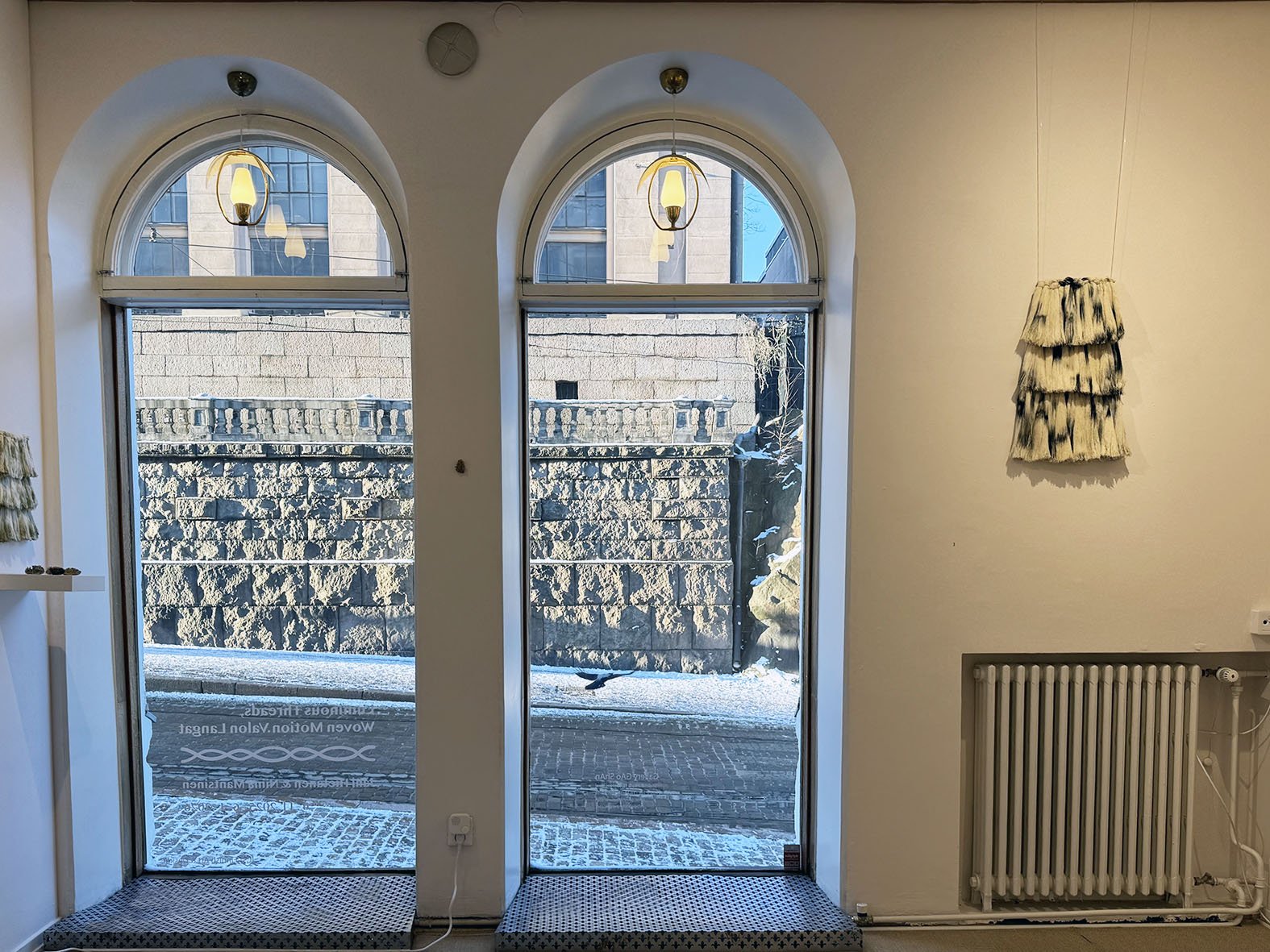
In the midst of downtown Helsinki’s architectural rhythm, Luminous Threads, Woven Motion unfolds a gentle yet vivid dialogue between the urban and the natural. Walking into Gallery GAo ShAn, visitors are invited to tune their senses—sight, sound, and tactility—into an art experience that carries elements of nature into the gallery space itself. There threads, textures, and soundscapes invite a meditative awareness of the world beyond glass and asphalt.
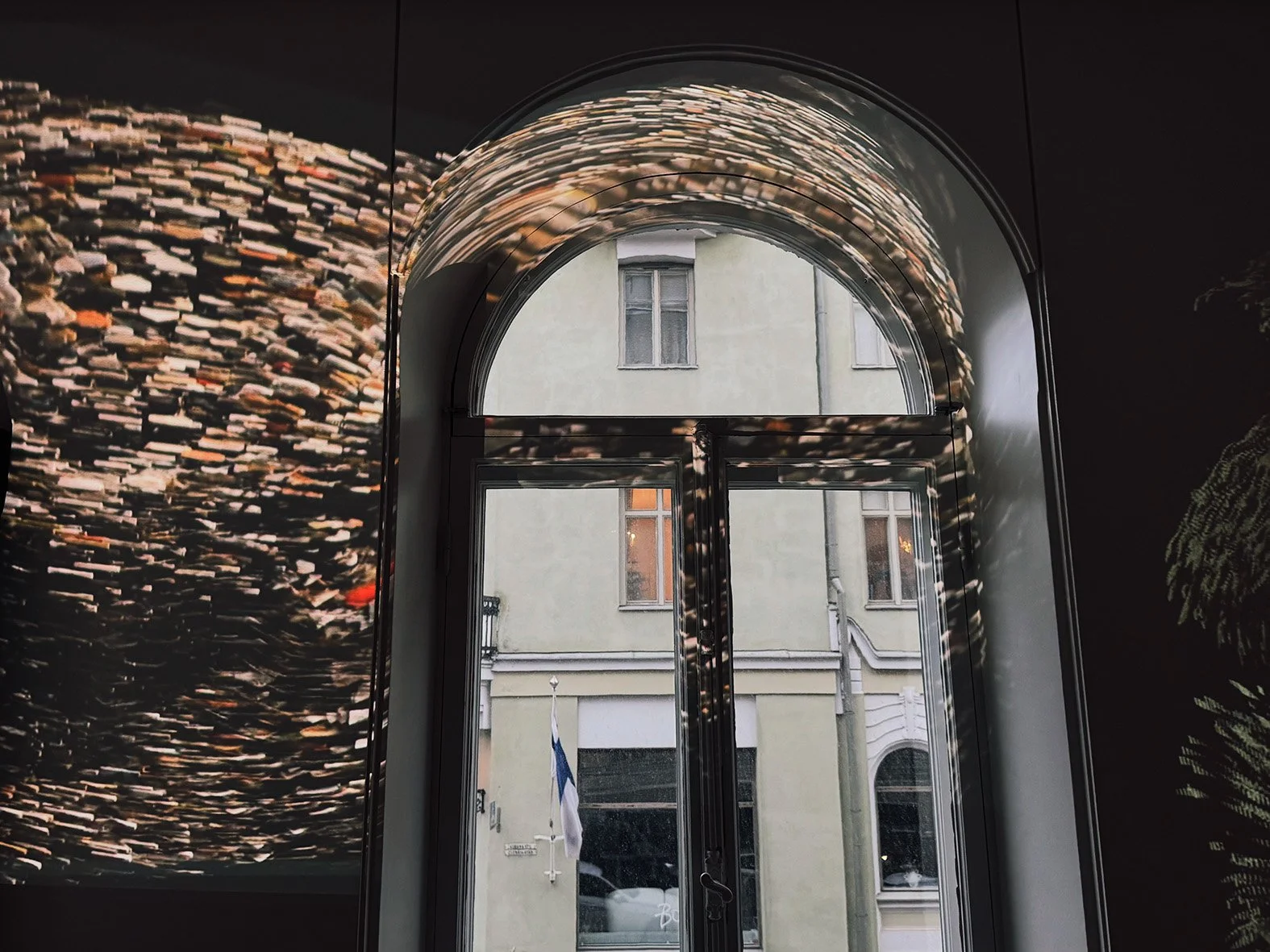
Gallery GAo ShAn’s current venue with art in Kruununhaka, Helsinki
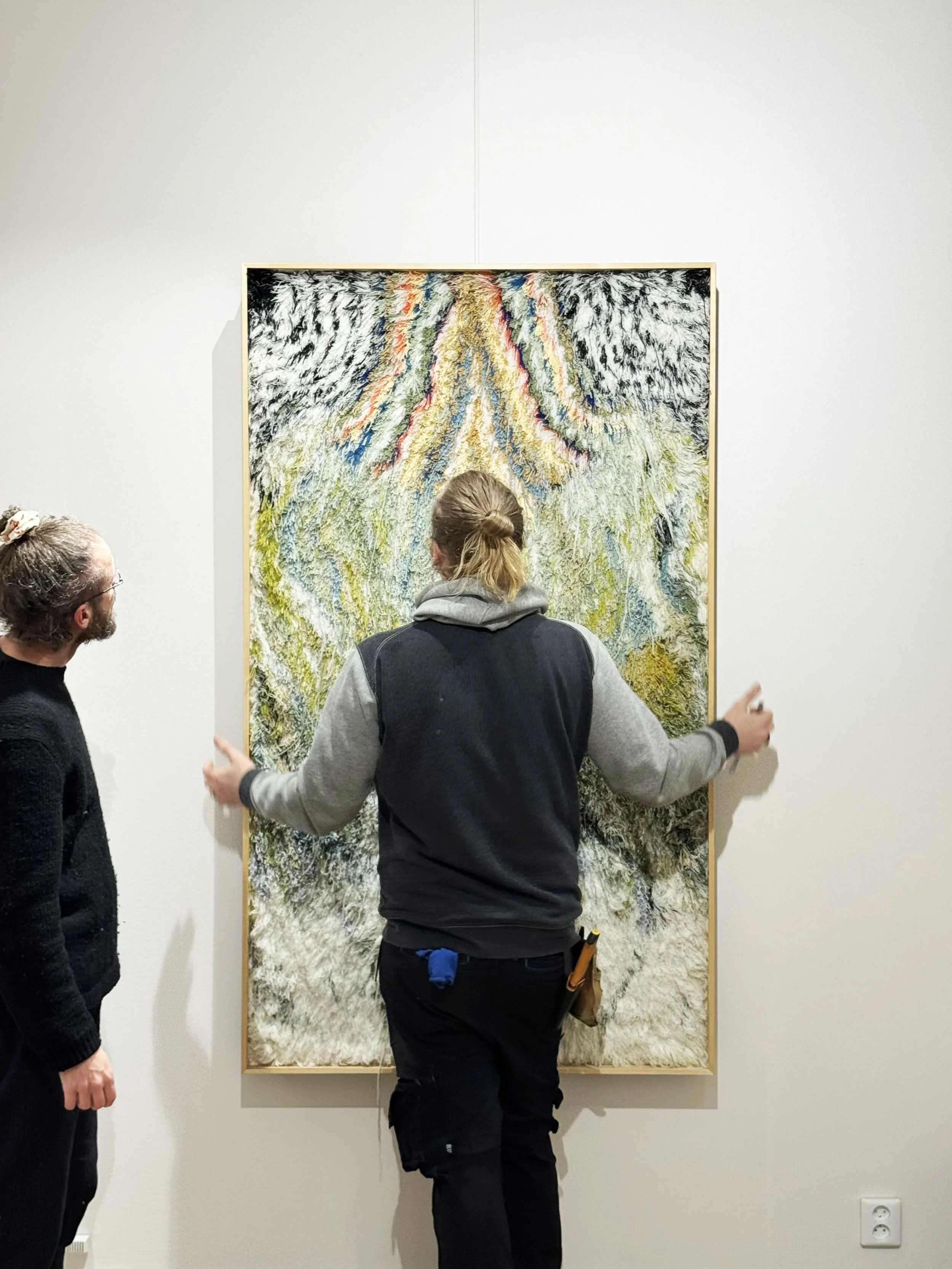
Artwork installation process
Encapsulating experiences
Within the gallery, projections and subtle video elements animate natural forms; light becomes an echo of leaves, and motion mirrors the pulse of breath and growth. Here, new media does not replace tradition but amplifies the elemental qualities of texture and tactility, creating an immersive environment where craft and digital resonance coalesce.
The exhibition’s multisensory ambition was especially palpable during the special event on December 11, when Gallery Gao Shan hosted an intimate ryijy-making workshop. Under expert guidance from exhibition artist Niina Mantsinen, participants learned the rhythms and gestures of traditional Finnish weaving. Niina’s practice—rooted in careful material exploration and reflection on nature’s presence in craft—brought alive the lineage of ryijy as both technique and symbol.
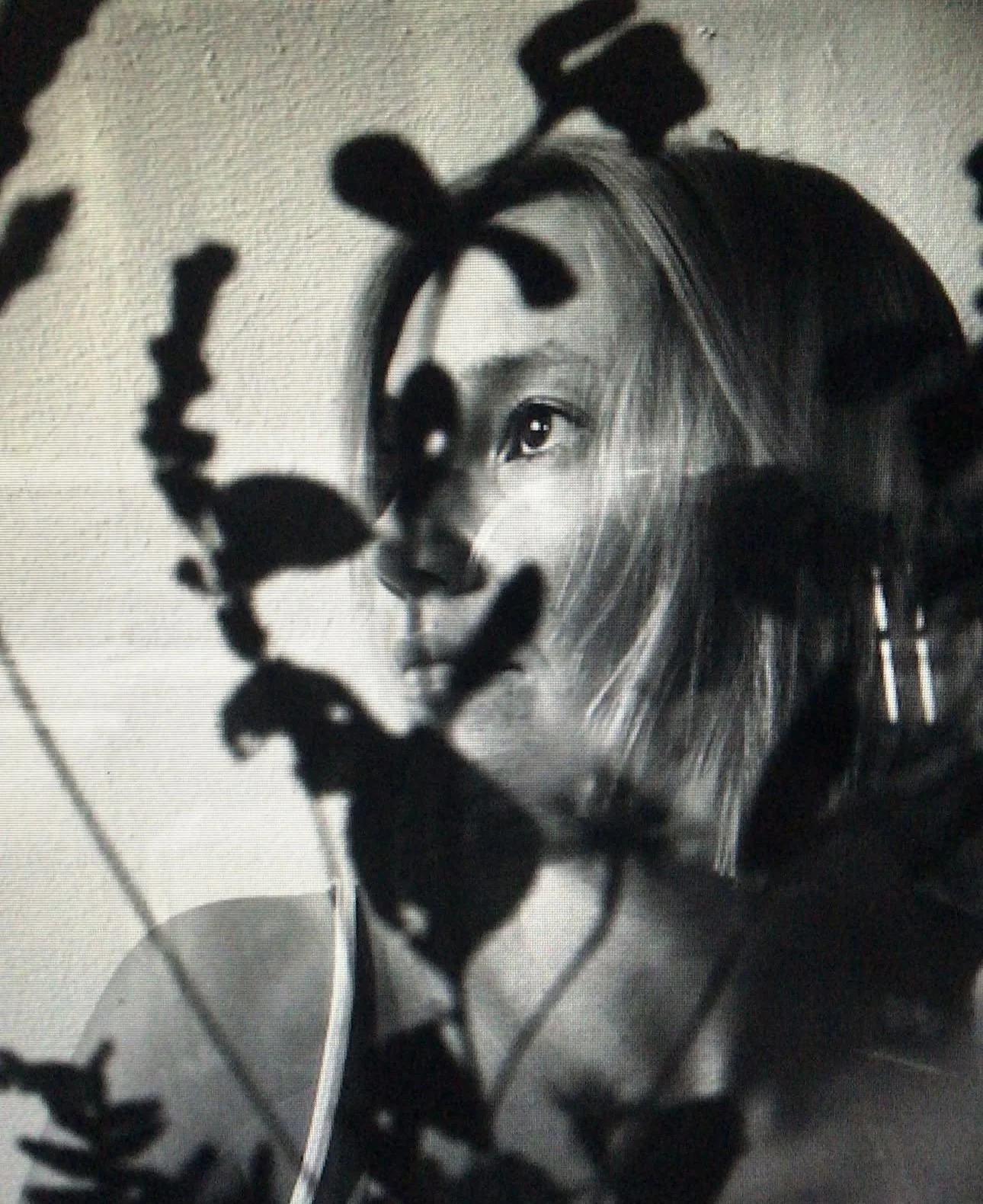
Artist: Niina Mantsinen
Complementing this tactile experience, exhibition artist Jani Hietanen enveloped the space with a bespoke soundscape composed from field recordings gathered in the ancient Finnish forests of Aapronlampi and Kometto, where trees stand in silent testament to time. The result was an atmosphere at once cozy and contemplative—threads under hand, forests in earshot, and the room itself breathing with artful calm.
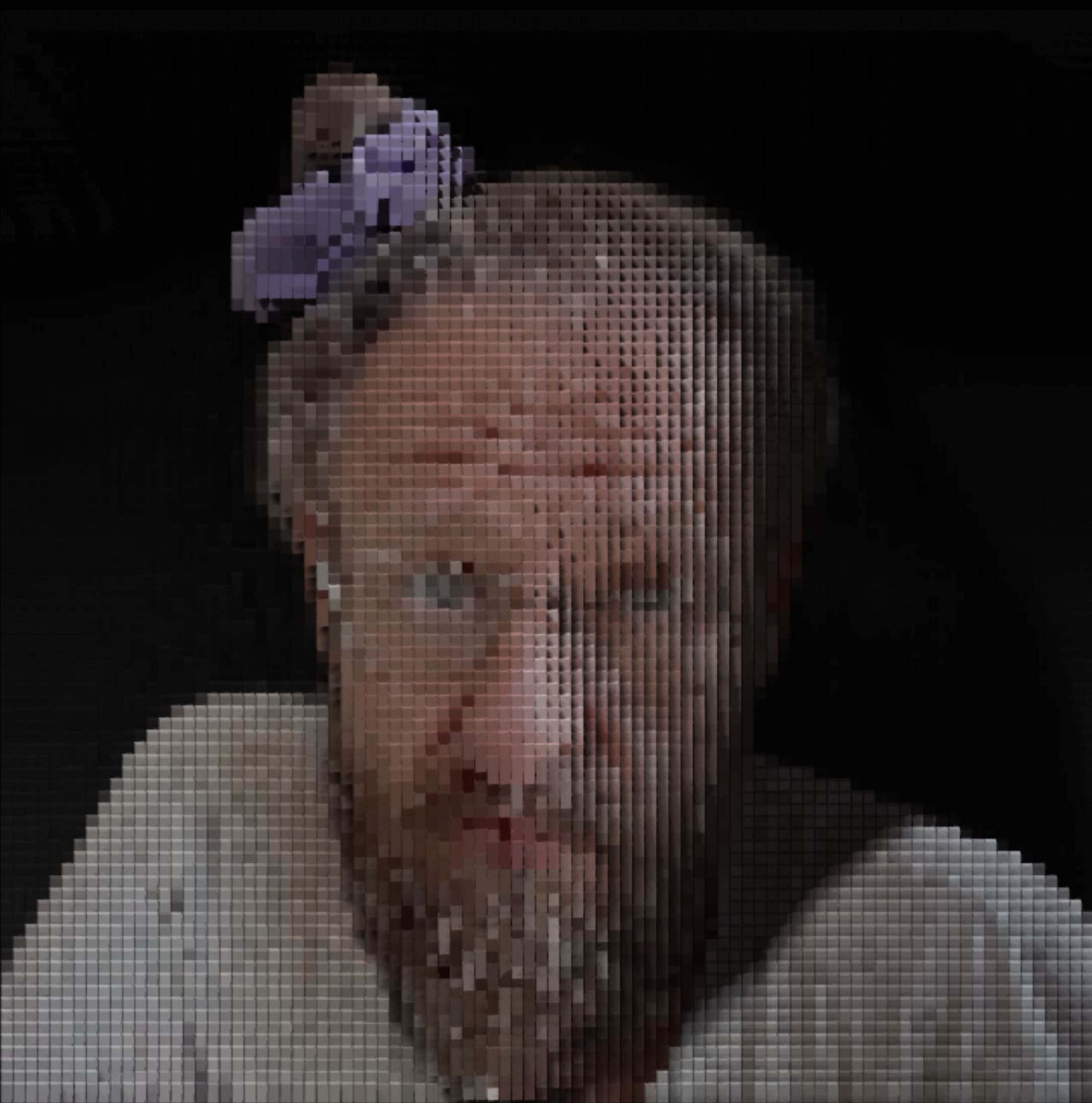
Artist: Jani Hietanen
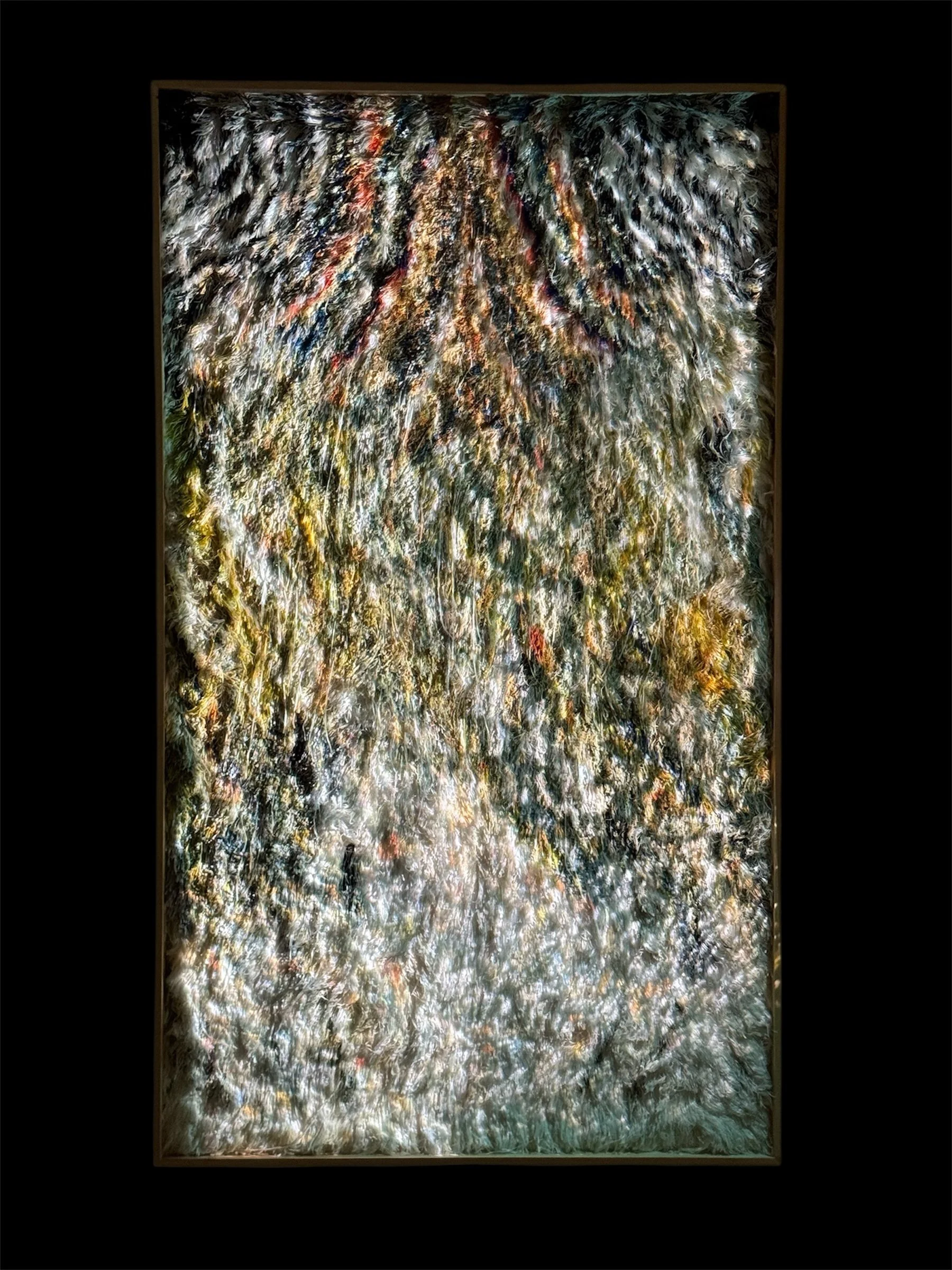
Niina Mantsinen . Jani Hietanen/ Comforter / Rug with media projection
At the heart of this encounter is a lineage of craft that has long anchored Finnish artistic identity: textile art. In Finland, textile expression has been both a practical art and a symbolic one. Among its most distinctive forms is the ryijy—a long pile or knotted-pile rug whose name originates from the Scandinavian rya, meaning “thick cloth.”
Traditionally woven for warmth and utility, ryijys were used as bed covers, boat blankets, and festive ceremonial hangings, often in natural tones of white, grey and black before vegetable and chemical dyes broadened their palette. Over centuries, what began as a utilitarian weave blossomed into expressive textile art, embraced as decorative and cultural heritage unique to Finland.
Emergence of modern artistic expression
Throughout the 20th century, Finnish textile art expanded beyond folk and utility into modern artistic expression. Associations such as the Friends of Finnish Handicraft elevated traditional weaving into an art form that engaged architects and designers, preserving classic techniques while inviting modern aesthetics.
Artists like Kirsti Ilvessalo and Ritva Puotila brought ryijy into international design dialogues, earning accolades and embedding textile art into both public interiors and museum collections.
In this lineage of craft and sensory depth, Luminous Threads, Woven Motion finds its poetic purpose. The exhibition’s works evoke the quiet energies of forests, the whisper of wind through foliage, and the layered rhythms of winter light on moss and bark. In conversation with these textured surfaces is new media art—a practice harnessing digital tools to reimagine sensory experience.
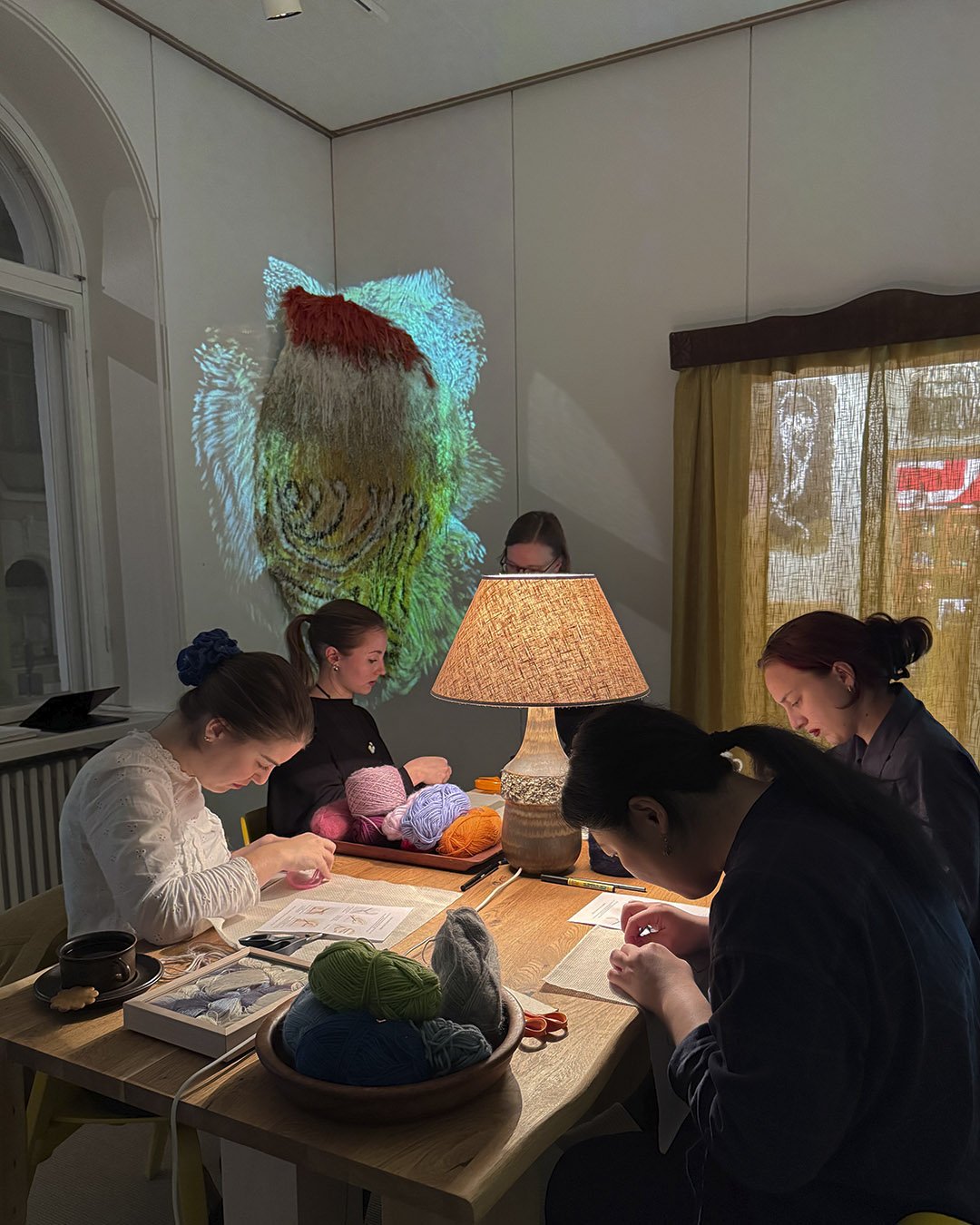
Guided introduction to traditional ryijy sewing event
Coming together of complementary talents
Both artists speak of interconnections—Niina likening the weave of fiber to the unseen patterns of ecosystems; Jani describing sound as tactile space that converses with visual and material forms. Their shared reflections shaped an exhibition in which the sensory and the crafted are inseparable, inviting visitors to dwell in the confluence between nature and human creation.
What binds the practices of Niina Mantsinen and Jani Hietanen together is not only collaboration, but a shared sensitivity to time, slowness, and layered perception. Mantsinen speaks openly about how textile work carries a different rhythm than much contemporary production: the value of an artwork is often questioned through the time it takes to make it. For her, slowness is not nostalgia but resistance—a way of thinking through hands, fibre and repetition. Whether working with traditional ryijy techniques or faster tufting methods she likens to spray painting, time remains present as a quiet force shaping both form and meaning.
Hietanen approaches technology with a similar attentiveness. In his practice, digital tools are not instruments of speed but of listening. Working with projections, sound and generative systems becomes a rhythmic, almost meditative process, where intuition guides technical decision-making. He describes moments when light interacts with textile fibres as deeply moving—when material remains unchanged to the hand yet opens into another dimension for perception. Projection, in this sense, does not decorate the textile but breathes alongside it.
This dialogue unfolds distinctly between day and night. During daylight hours, the textiles stand on their own: tactile, grounded, and warm, inviting close observation of fibre, dye and structure. As darkness falls, the exhibition shifts. Moving images and sound enter the space, transforming the works into something more fluid and ephemeral. Textiles become landscapes for light; visitors find themselves inside an altered sensory field where material and immaterial merge.
Together, Mantsinen and Hietanen propose an experience that resists immediacy. There is no single way to encounter the works—only an invitation to stay, to notice how forest, city, craft and technology quietly overlap. In this shared space, perception slows, and the ordinary urban moment opens toward something more elemental.
Luminous Threads, Woven Motion continues at Gallery Gao Shan is a quiet invitation: to pause, to feel, to listen. Here, nature isn’t merely referenced; it is woven into the experience—a reminder that even in urban surroundings, the pulse of the living world persists in texture, sound, and stillness.
Quisque iaculis facilisis lacinia. Mauris euismod pellentesque tellus sit amet mollis.